

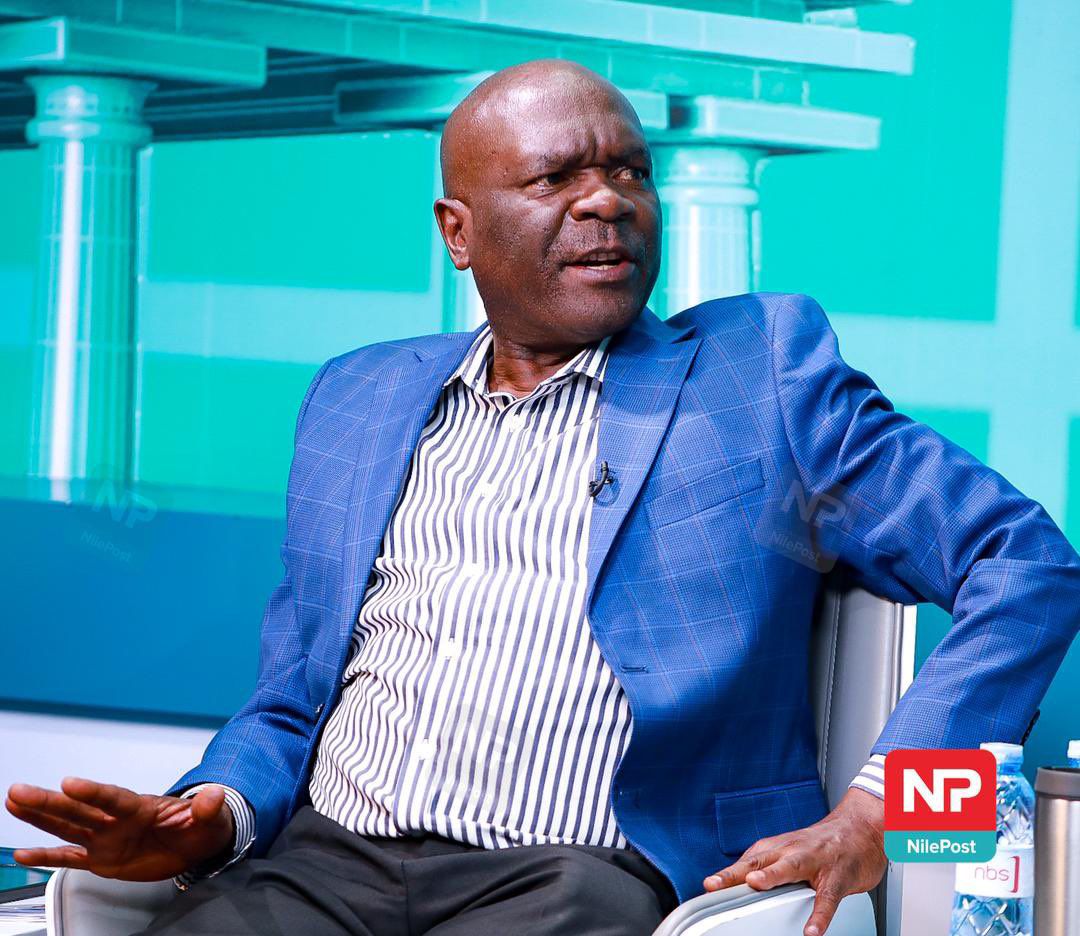
Mawokota South Member of Parliament and Deputy President of the Forum for Democratic Change (FDC) for the Central Region, Yusuf Nsibambi, has defended his recent meeting with President Museveni, saying the engagement was intended to advance national dialogue, reconciliation and secure the release of political detainees.
Speaking on NBS Frontline on Thursday, Nsibambi maintained that he remains a committed Opposition leader and holds his position within the FDC legitimately.
“I’m the Deputy President for FDC in charge of the Central Region. I’m still a member of the Opposition. My party is concerned about my meeting with President Yoweri Kaguta Museveni, and it’s something we shall discuss internally,” he said.
Nsibambi clarified that the party has not yet taken an official position on his engagement with the President. While the FDC Party President indicated he was unaware of the meeting, Nsibambi said the Secretary General had prior knowledge.
“FDC hasn’t come up with a position yet. The Party President said he wasn’t aware of the meeting with President Museveni, but the Secretary General was aware. Maybe there was misinformation which we need to clarify with the party,” he explained.
He added that, as an elected leader and Chief Whip of his party, he acted within his mandate.
“I am an elected leader and Chief Whip of my party, and my Secretary General knew I was meeting the President,” he said.
The February 5, 2026 meeting at State House Nakasero saw Nsibambi lead a delegation of opposition legislators — including members of the FDC, the Democratic Party (DP) and other political groups — in discussions with President Museveni focused on national stability and reconciliation following what he described as a tense post-election period.
According to Nsibambi, the talks centred on easing political tensions and fostering unity for development and stability.
“The talks were about easing political tensions and promoting unity for development and stability,” he said.
He pointed to what he described as early progress on the release of detained opposition supporters. Nsibambi revealed that 34 young men and women were released from Mpigi Court earlier this week.
He further disclosed that a list of 50 supporters of the National Unity Platform (NUP) is expected to be processed for release within two weeks, subject to agreement from the party and their families.
“Two weeks after that, we have another 70 people expected to be released from different prisons across the country. In March, more opposition supporters in prison will be released under an arrangement,” he said.
The delegation also appealed for clemency for hundreds of political detainees and called for an independent investigation into the continued detention of Muhammad Muwanga Kivumbi, Buganda Deputy President of NUP and MP for Butambala County.
The engagement has drawn mixed reactions within opposition circles, with some leaders questioning both its timing and manner. Critics argue that Nsibambi acted unilaterally and risked undermining a collective opposition strategy.
However, Nsibambi dismissed those claims, insisting that dialogue should not be criminalised.
“No one sent me. I am an elected MP, and I will engage with whoever I believe is necessary for the good of my constituents and the country. Is it a crime to meet the President? I see no reason to explain meeting the President,” he said.
He also challenged what he described as a culture of political gatekeeping within sections of the opposition.
“There is this belief that certain people are the only ones to come up with ideas and all we have to do is follow,” he said.
Expressing optimism about dialogue in Uganda’s polarised political environment, Nsibambi added: “There is hope that we can sit down and talk and get results.”
The developments underscore ongoing debates within Uganda’s political landscape over the role of dialogue, dissent and reconciliation, with divisions persisting on how best to engage the Executive while maintaining opposition unity.
